
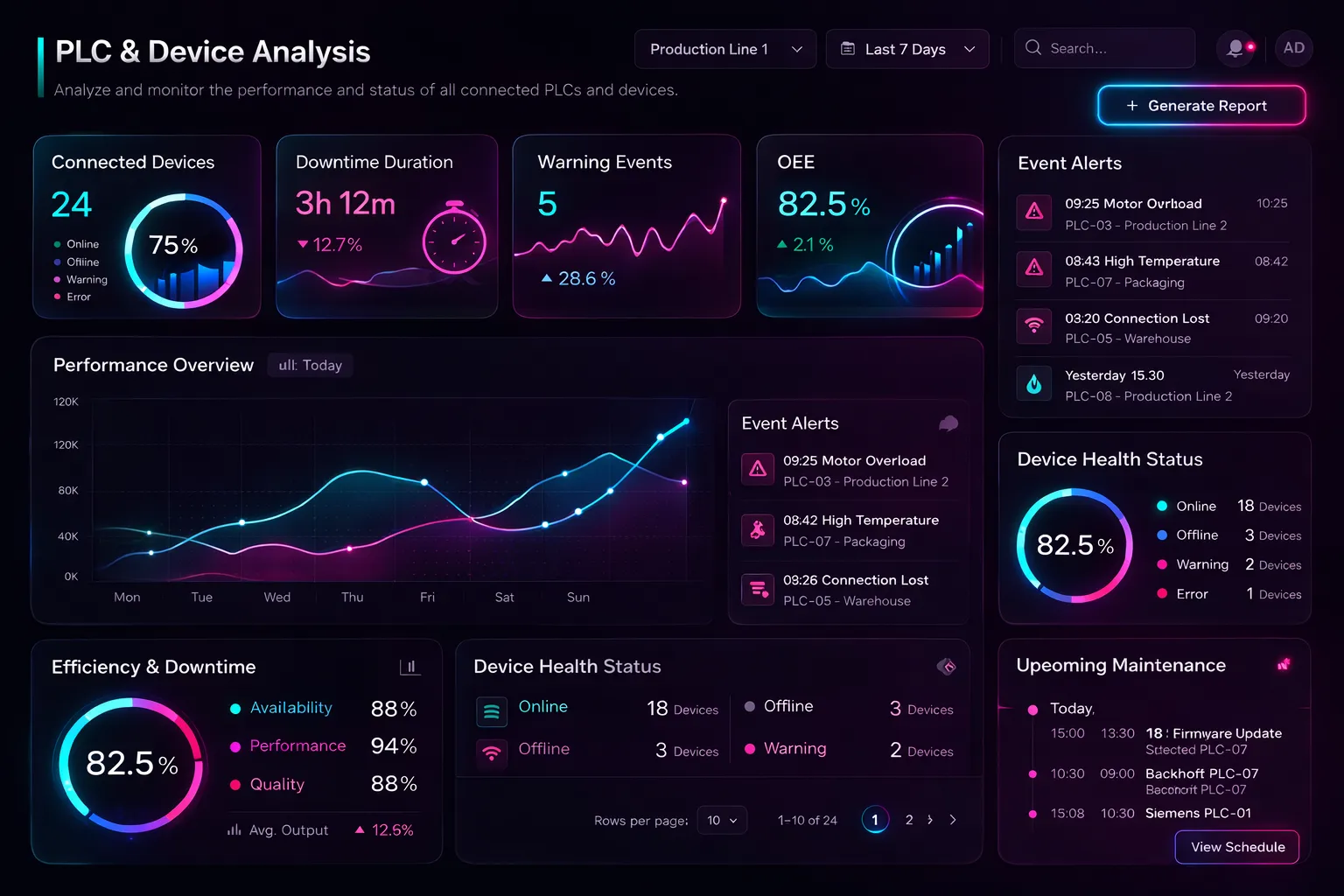
Real-time machine analytics
Bustra provides full visibility into your production by collecting and processing real-time data from all connected PLC systems. Instead of relying on fragmented dashboards or isolated machine views, all relevant information is centralized and standardized.
The platform enables continuous monitoring of machine states, performance indicators, and production metrics. Historical data is stored and can be analyzed to identify trends, inefficiencies, or anomalies over time. Companies can define their own KPIs and create custom views tailored to their processes.
This turns raw industrial data into a structured and actionable foundation for decision-making.
PLC and device management
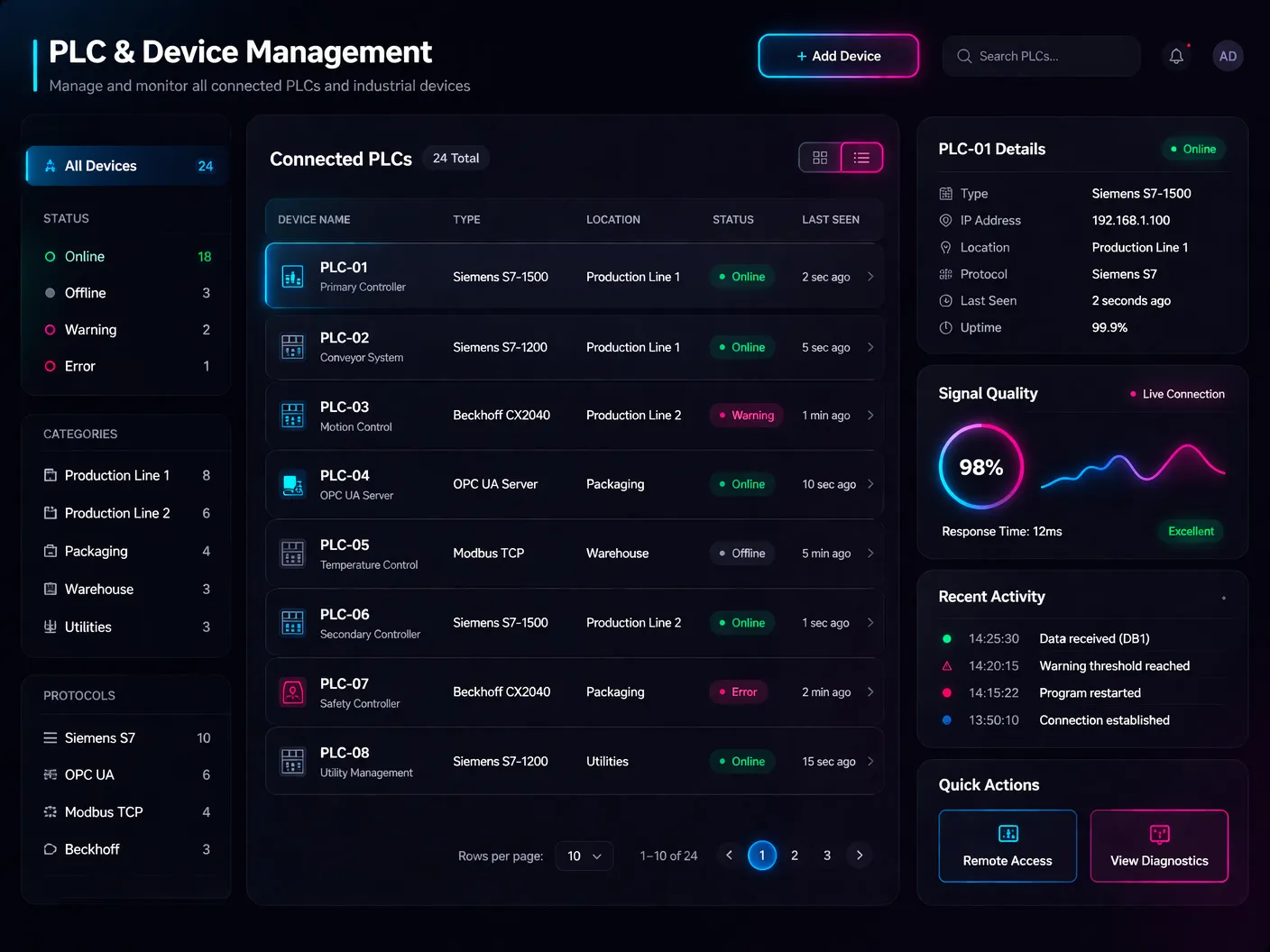
Bustra allows you to manage all connected machines and control units within a single interface, regardless of manufacturer or protocol. Whether your production environment consists of Siemens S7 systems, Beckhoff controllers, OPC UA devices, or legacy Modbus setups, everything is consolidated in one platform.
Each PLC can be monitored in terms of connectivity, health status, and data availability. Configuration changes can be applied remotely, reducing the need for on-site adjustments and manual interventions.
This creates a clear and scalable structure for managing even complex and distributed machine environments.
Unified API and integrations
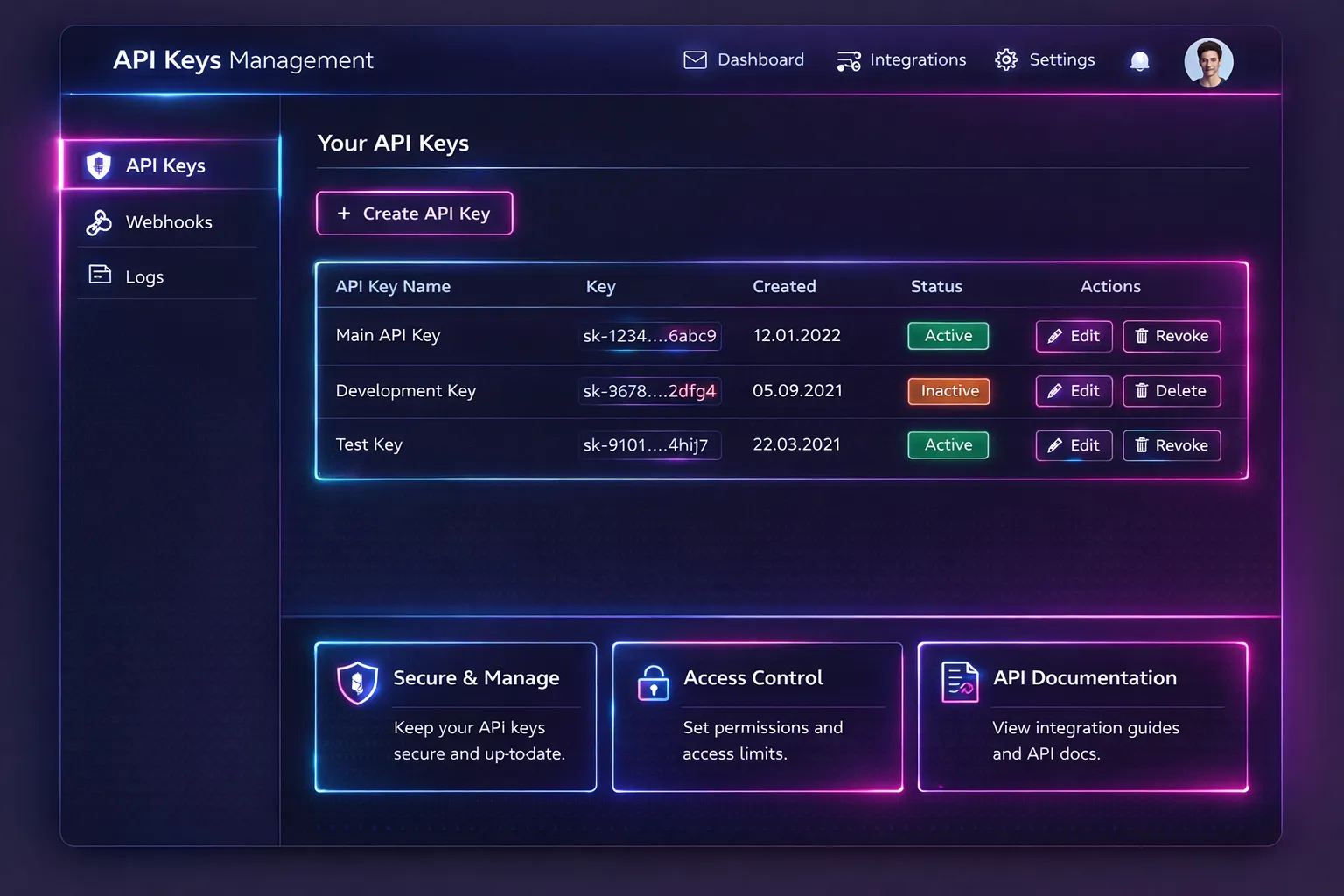
At the core of Bustra is a standardized API that provides access to all machine data and control capabilities. Instead of building individual integrations for each PLC or system, companies can rely on one consistent interface.
The API supports data retrieval, command execution, and event handling, making it possible to integrate production systems with ERP, MES, analytics platforms, or custom applications. It also enables seamless connectivity to workflow automation tools such as n8n or external AI systems.
This API-first approach allows companies to treat their production environment as a programmable system.
Event and alert handling
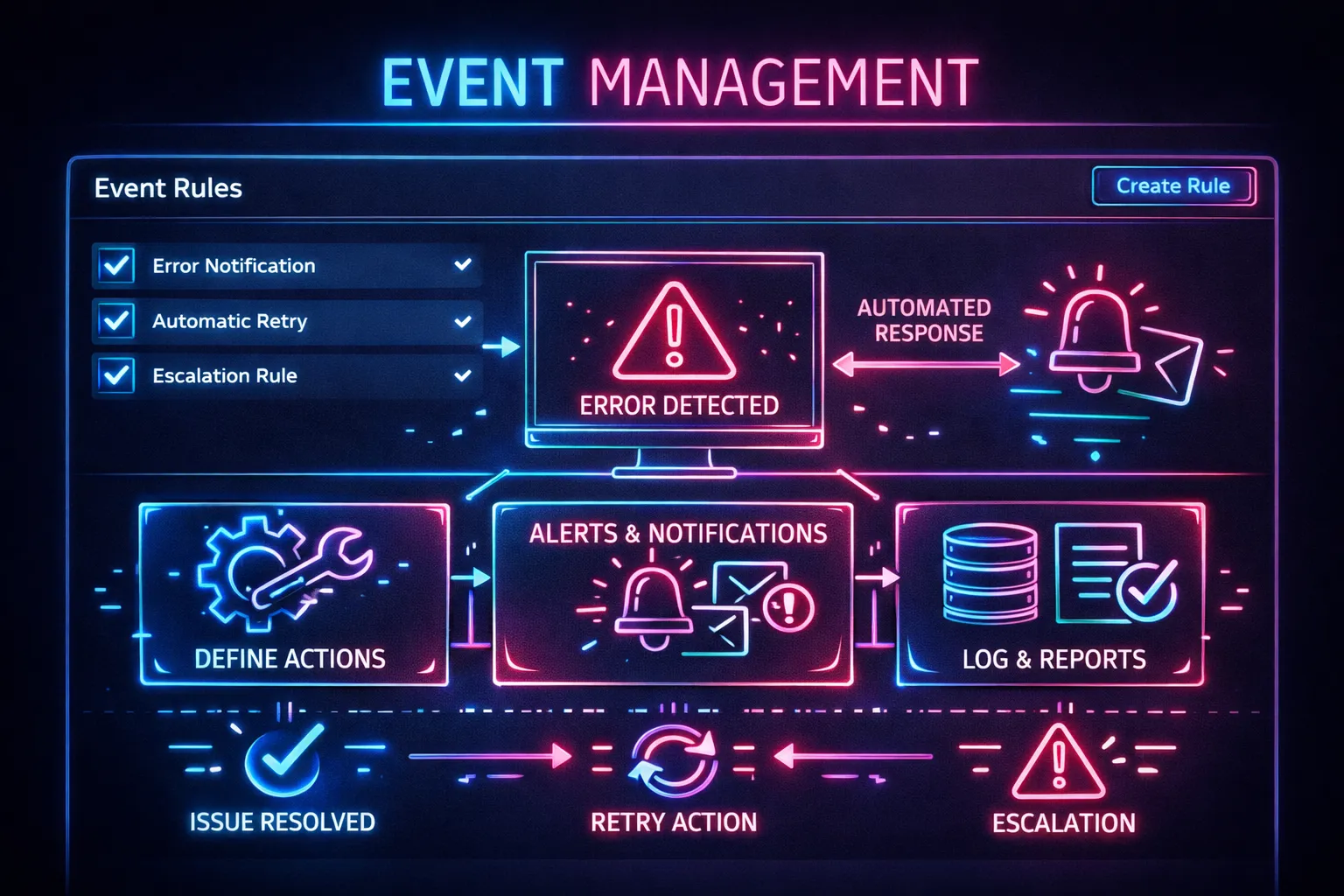
Bustra continuously monitors machine states and allows users to define events based on specific conditions. These can include error states, threshold violations, or changes in production parameters.
When an event occurs, the system can trigger notifications, initiate workflows, or call external services through webhooks. This ensures that relevant actions are taken immediately without manual intervention.
The event system transforms passive monitoring into active process management, enabling faster response times and more reliable operations.
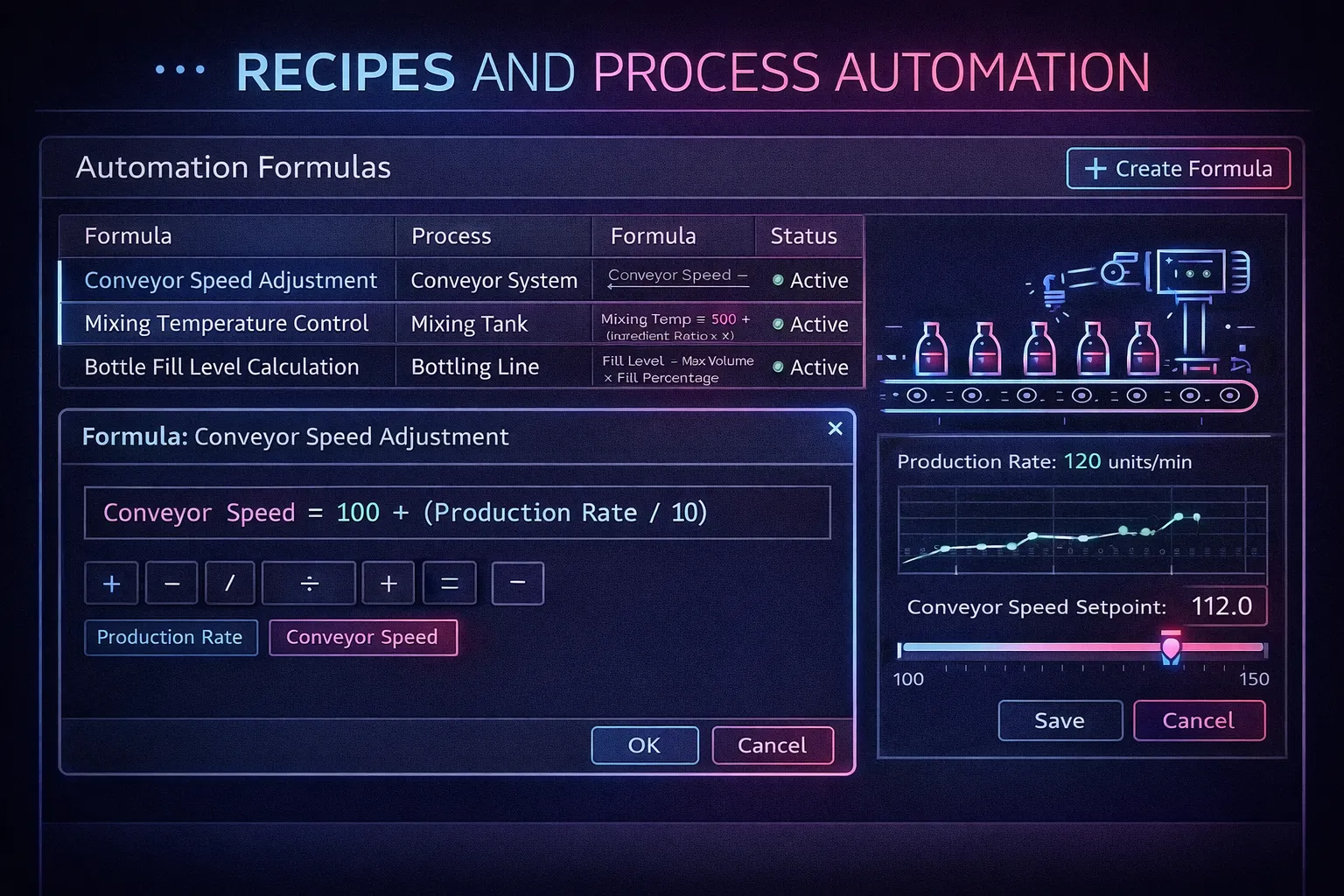
Recipes and process automation
Bustra introduces a flexible way to define and manage process logic outside of the PLC itself. Through so-called “recipes,” users can create reusable workflows that combine data inputs, conditions, and actions.
These recipes can be edited, versioned, and deployed directly from the cloud platform. Once defined, they are transmitted to the Bustra Box and executed in coordination with the connected PLCs.
This makes it possible to adapt processes, introduce new logic, or automate workflows without modifying existing PLC programs. It significantly reduces development effort and increases flexibility in production.
Remote control and command execution
Beyond data access, Bustra enables controlled interaction with machines. Users can send commands, adjust parameters, and trigger processes directly from the platform.
All write operations are governed by strict permission rules to ensure safety and control. The system provides real-time feedback, allowing users to verify that commands have been executed successfully.
This extends the role of the platform from monitoring to active control of production systems.
Cloud-based management platform
Bustra provides a centralized environment for managing devices, users, and system configurations across all connected locations. Whether a company operates a single production line or multiple facilities, everything can be controlled from one interface.
The platform includes tools for managing access rights, monitoring system status, and organizing connected machines. It also supports subscription management and usage tracking based on connected PLCs.
This ensures transparency and control at both technical and business levels.
Security and access control
Security is a fundamental aspect of the Bustra architecture. The system is designed to meet the requirements of industrial environments where reliability and protection are critical.
Communication between the Bustra Box and the cloud is encrypted, and all access is controlled through role-based permissions. Users can be assigned specific rights for reading data, executing commands, or managing configurations.
In addition, all actions are logged, providing full traceability and auditability.
Edge deployment with the Bustra Box
The Bustra Box acts as the local gateway between machines and the cloud. It connects directly to PLC systems, translates industrial protocols, and prepares data for further use.
By processing data at the edge, the system ensures low latency, stability, and independence from constant internet connectivity. Data can be buffered locally and synchronized with the cloud as needed.
This combination of edge processing and cloud integration provides both reliability and scalability for modern industrial applications.
Built for scalable industrial environments
Bustra is designed to grow with your production. Whether you start with a few machines or expand to hundreds of PLCs across multiple sites, the platform maintains a consistent structure and performance.
The architecture allows companies to gradually connect their infrastructure, without large upfront projects or system replacements.
This makes Bustra suitable for both incremental digitalization and large-scale industrial transformation.