
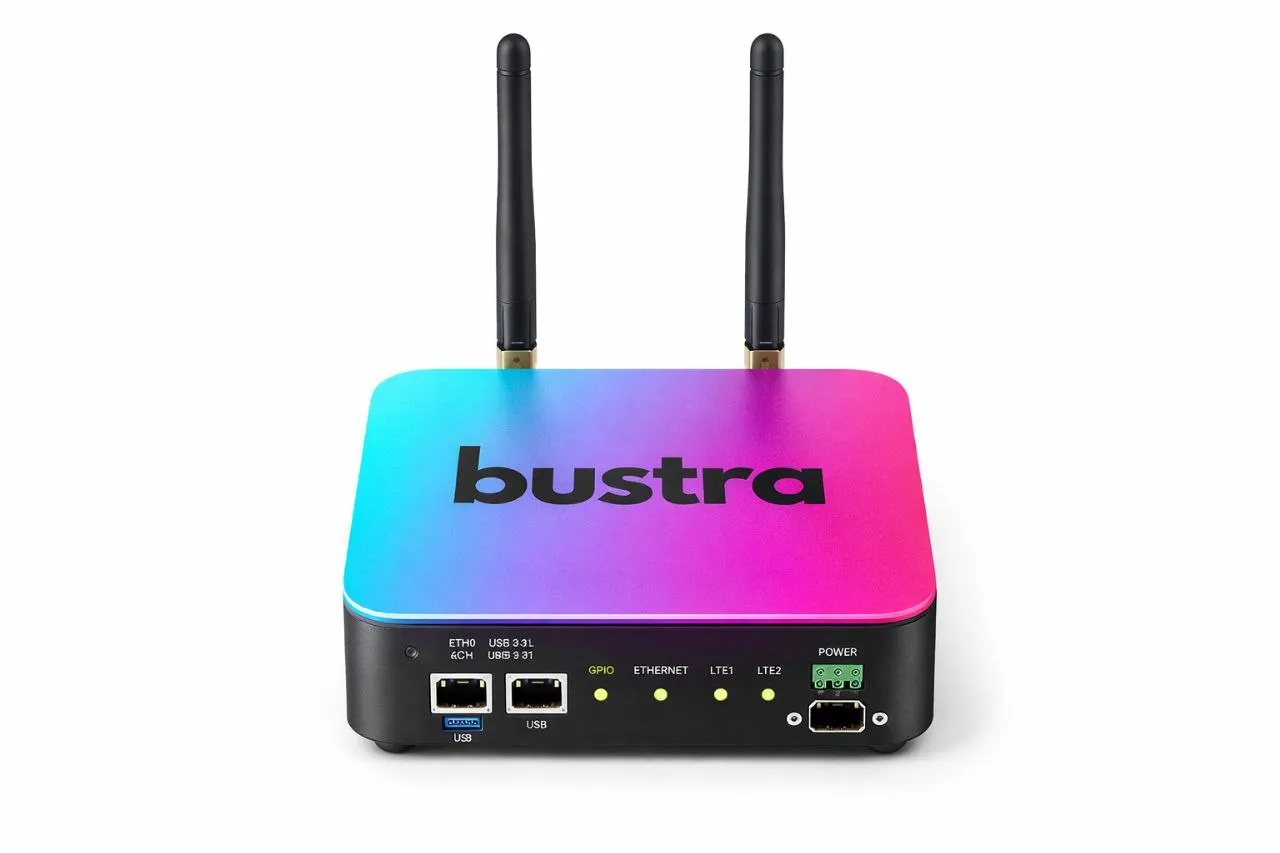
Connect any machine. Control everything.
Connect your machines and unlock real-time production data and control
Bustra connects your PLC-controlled machines to a unified cloud API, enabling real-time data access, automation, and remote control – without replacing existing systems.
Modern production environments are built on a wide range of PLC systems such as Siemens S7, Modbus, OPC UA, or Ethernet/IP. These systems often operate in isolation, making it difficult to access, standardize, and use machine data across the entire production.
Bustra solves this by introducing a universal edge layer. The Bustra Box connects directly to your machines, collects and normalizes industrial data, and exposes it through a single API in the cloud. This allows you to integrate your production with ERP systems, MES platforms, analytics tools, and AI models. Without complex custom integrations.
The result is full transparency and control over your production processes. You can monitor machine states in real time, optimize workflows, implement predictive maintenance, and even control processes remotely. Bustra transforms fragmented machine environments into a connected, scalable digital infrastructure.
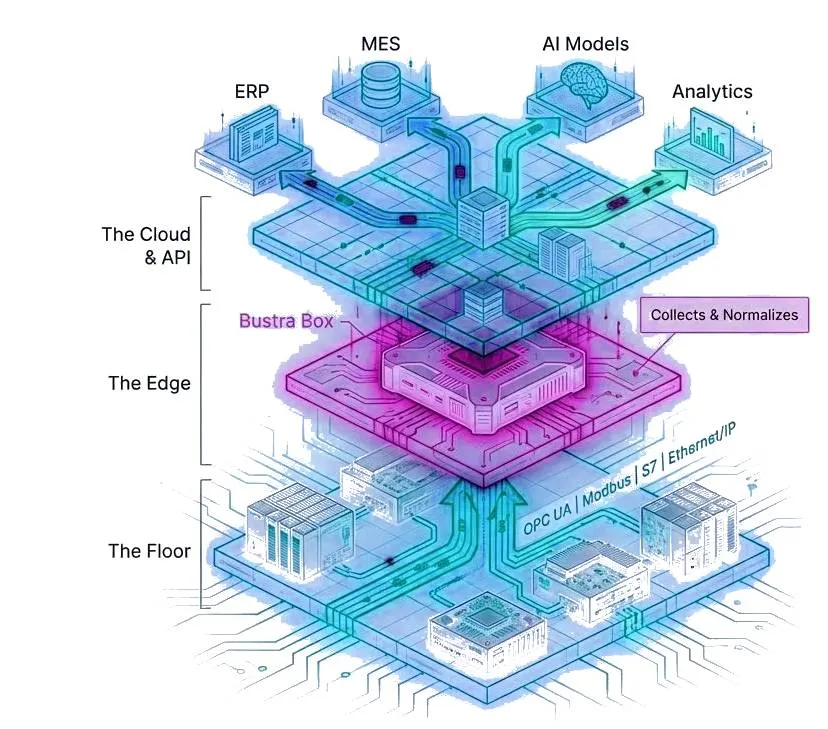
Works with your existing PLCs and machine systems
No replacement. No disruption. Bustra integrates directly with your current production environment.
The future of production starts now
Secure early access and bring your machines online before the rest of the industry catches up.
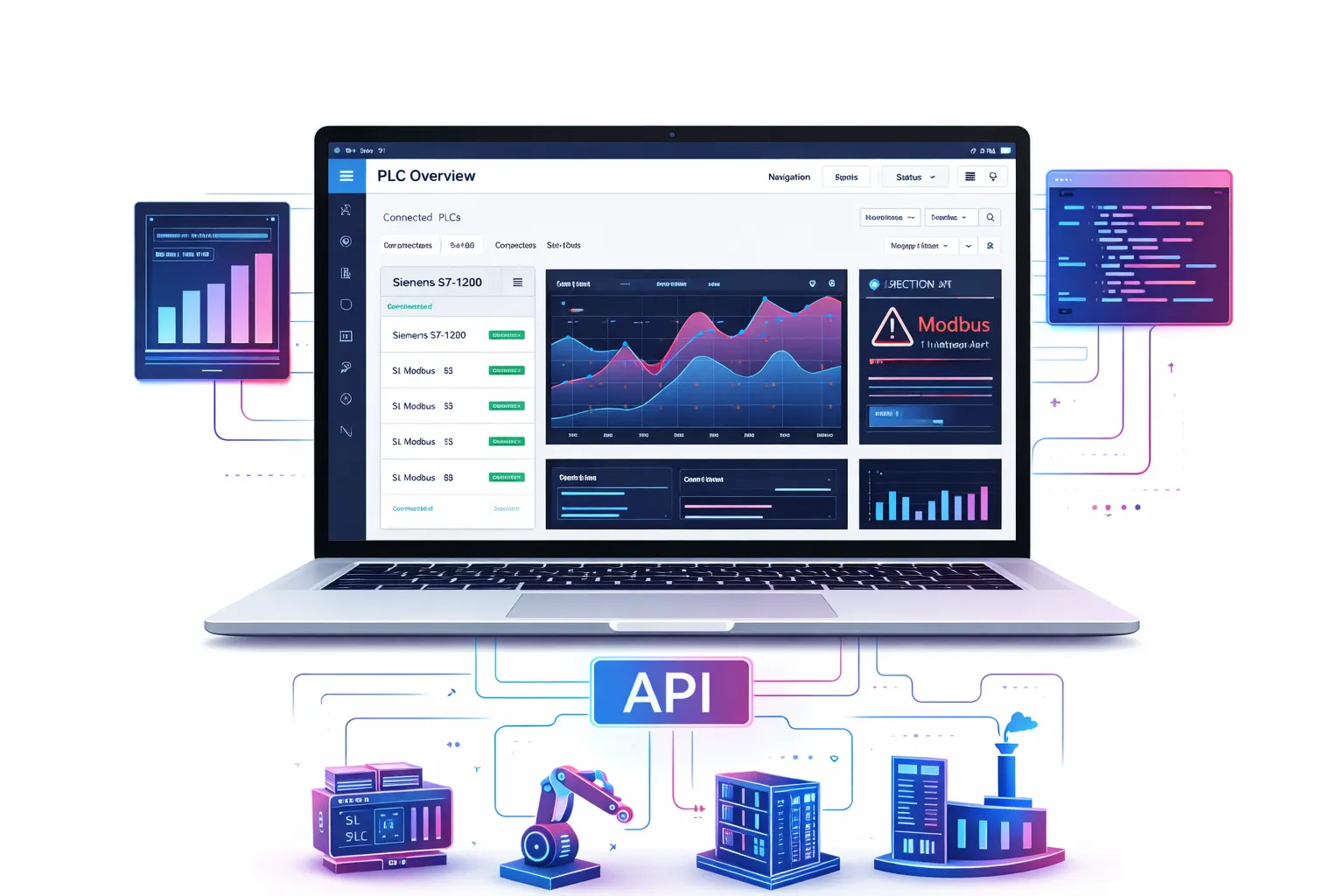
Bustra gives you a centralized view of your entire production environment. Through a single interface, you can monitor machine states, analyze performance data, and interact with your PLC-controlled systems in real time.
All machine data is collected and standardized via the Bustra Box and made accessible through a unified API. This allows you to connect your production seamlessly with existing systems such as ERP and MES, or build your own applications on top of it.
Instead of dealing with fragmented dashboards and complex integrations, Bustra provides a clear and consistent way to understand and control your production processes. From real-time monitoring to automation and AI-driven optimization, everything becomes accessible through one connected system.
Ut enim ad minim veniam.
Frequently asked questions
Everything you need to know about integrating your production environment, accessing machine data, and controlling processes with Bustra.
Bustra is a vendor-agnostic industrial data platform that connects to PLC-controlled machines such as Siemens, Beckhoff, and other systems. A local edge device (Bustra Box) collects and normalizes machine data using protocols like OPC UA, Modbus, and S7, and makes it accessible via a unified cloud API.
Bustra supports a wide range of industrial control systems and protocols, including Siemens S7, OPC UA, Modbus TCP, and Ethernet/IP. This allows it to connect to most modern and legacy PLC environments without requiring changes to existing machines.
No. Bustra works alongside your existing infrastructure. It does not replace PLCs, SCADA, or MES systems but adds a new layer that makes machine data accessible and usable across different applications.
Machine data is exposed through a standardized API. This allows you to integrate your production data into ERP systems, MES platforms, analytics tools, dashboards, or custom software without building individual integrations for each PLC.
Bustra supports both reading and writing of data where permitted. This means you can not only monitor machine states but also trigger processes, adjust parameters, and implement remote control in a secure and controlled way.
Yes. Bustra is designed with industrial security in mind. The edge device operates locally within your network, and all communication to the cloud is encrypted. Access control and permissions ensure that only authorized users can interact with machines.
Installation is simple. The Bustra Box is connected to your local network and configured to communicate with your PLCs. There is no need for major system changes or complex integration projects.
Bustra follows a simple subscription model. You pay a monthly fee per connected PLC, making costs predictable and scalable as your production grows. The bustra box costs are one time.
Yes. Bustra provides structured, real-time machine data that can be directly used for AI applications, predictive maintenance, and advanced analytics without additional data preparation.
Bustra is ideal for manufacturers, machine builders, system integrators, and software providers who want to connect machines, access production data, and build modern digital applications on top of industrial systems.
The future of connected industrial production starts here
Industrial production is undergoing a fundamental transformation. As automation, cloud systems, and AI continue to evolve, the ability to access, understand, and control machine data is becoming a critical competitive advantage.
Yet most production environments still operate with:
Isolated PLC systems
Proprietary protocols such as Siemens S7, Modbus, or Ethernet/IP
Expensive and time-consuming custom integrations
Limited access to real-time production data
The result: data exists, but it is not accessible, not standardized, and not usable across systems.
Bustra connects your entire production
Bustra introduces a vendor-agnostic industrial data layer that connects machines and standardizes data across your entire production environment.
It works with a wide range of systems, including:
Siemens S7 (S7-1200 / S7-1500)
Beckhoff (TwinCAT)
OPC UA-enabled controllers
Modbus TCP and RTU devices
Ethernet/IP networks
Legacy PLC environments
There is no need to replace machines or modify existing control systems. Bustra integrates directly into your current setup and works alongside your infrastructure.
From machine data to real control
With Bustra, production systems become fully accessible and controllable.
You can:
Monitor machine states in real time
Analyze production performance instantly
Integrate data into ERP, MES, or custom systems
Build AI-driven optimization models
Trigger and control processes remotely
This transforms production from a static environment into a dynamic, connected system.
A unified API for industrial systems
Instead of dealing with multiple protocols and interfaces, Bustra provides:
One API for all machines
This allows companies to:
Build custom dashboards and applications
Access standardized machine data in real time
Integrate third-party tools and services
Develop scalable digital solutions
Production becomes programmable and developer-ready.
Edge and cloud combined
Bustra combines local reliability with cloud-based flexibility.
At the edge (Bustra Box):
Direct connection to PLCs
Protocol translation (OPC UA, S7, Modbus, etc.)
Data normalization and buffering
In the cloud:
Central device and user management
Secure API access
Monitoring and system overview
This architecture ensures both industrial stability and modern scalability.
Built for real business impact
By making machine data accessible and actionable, Bustra enables companies to:
Reduce downtime
Increase production efficiency
Gain full transparency across all machines
Implement predictive maintenance strategies
Develop new digital products and services
Simple and scalable pricing
Bustra follows a clear and transparent model:
Monthly pricing per connected PLC
No complex integration projects
Scalable across machines, lines, and locations
This makes costs predictable and aligned with actual usage.
Security and reliability by design
Bustra is designed specifically for industrial environments:
Local-first architecture within your network
Encrypted communication between edge and cloud
Role-based access and permission control
Controlled read and write access to machine systems
Your production remains secure while becoming fully connected.
Built for Industry 4.0 and beyond
As industries move toward connected, data-driven production, the need for a standardized and scalable infrastructure becomes essential.
Bustra acts as the missing layer between machines and modern software systems. It enables companies to connect legacy equipment, integrate new technologies, and build future-proof digital solutions on top of their production.
The question is no longer whether production should be connected.
It is how quickly you can make it happen.